
Types of Solar Panels: Monocrystalline vs Polycrystalline vs Thin-Film
Monocrystalline, polycrystalline or thin-film? Compare efficiency, roof space, cost and subsidy eligibility to pick the right solar panel for your home.
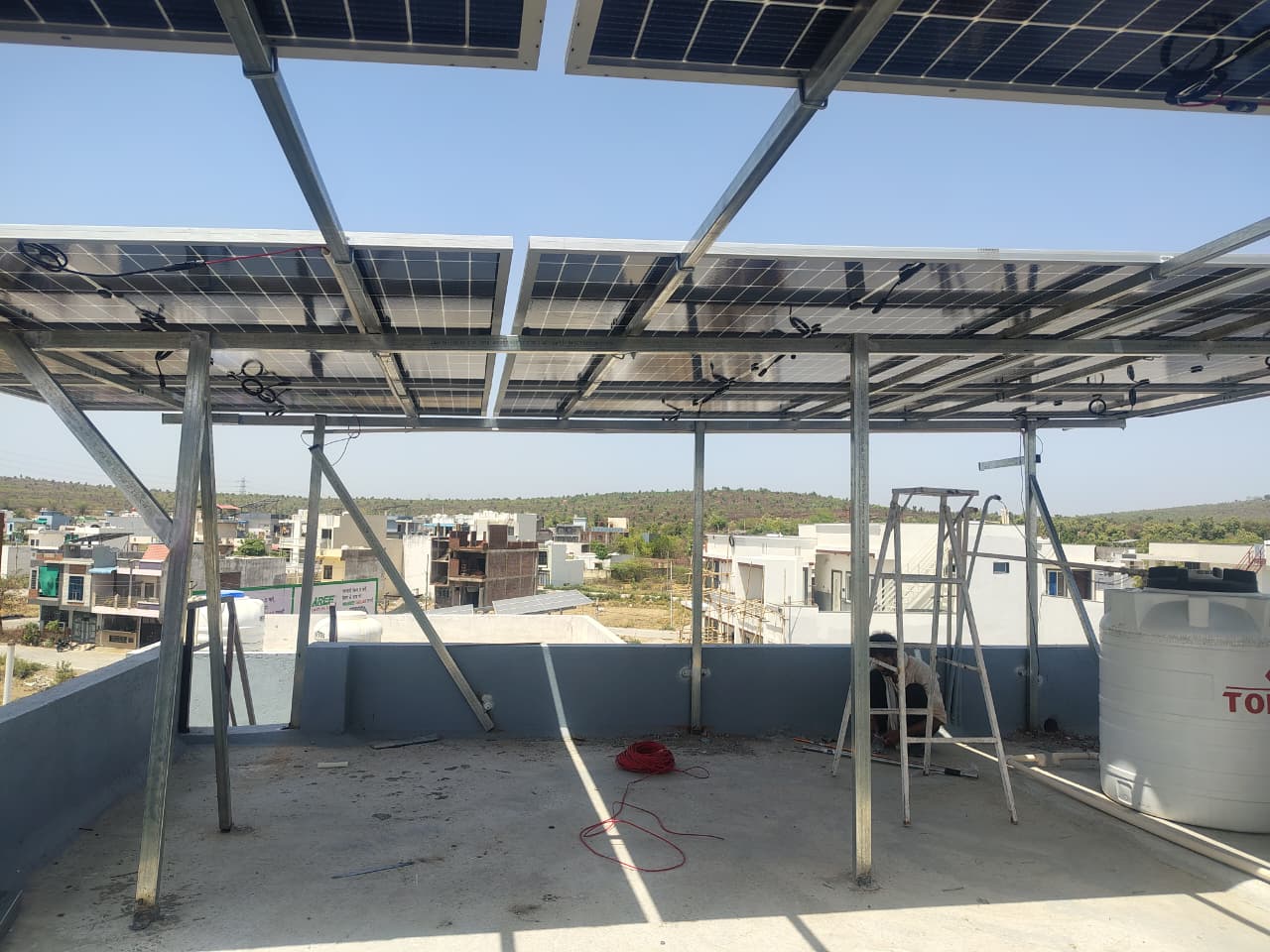
When you ask for a rooftop solar quote, you will hear terms like mono PERC, TOPCon, poly and bifacial. The panel type decides how much power fits on your roof, how the system handles heat, and whether you qualify for a government subsidy. Here is what each type means and which one suits a typical home.
Quick comparison
| Monocrystalline | Polycrystalline | Thin-film | |
|---|---|---|---|
| Efficiency | 20–23% | 15–17% | 10–13% |
| Roof space needed | Least | Moderate | Most |
| Heat performance | Good | Fair | Good |
| Cost per watt | Moderate | Lower (where still sold) | Varies |
| Best for | Homes and businesses | Budget, large roofs | Utility and special projects |
Monocrystalline panels
Monocrystalline cells are cut from a single, pure silicon crystal. That uniform structure lets electrons move freely, so these panels convert more sunlight into electricity. You can recognise them by their even, dark black colour.
Most rooftop panels sold today are monocrystalline, in a few variations:
- PERC (Passivated Emitter and Rear Cell) adds a reflective layer behind the cell to capture light that would otherwise pass through. It has been the mainstream technology for several years.
- TOPCon (Tunnel Oxide Passivated Contact) is the newer step up, with higher efficiency and slightly lower degradation over time.
- Bifacial panels collect light from both sides. They only earn their extra cost when mounted high above a reflective surface, such as a white-painted roof or an elevated structure.
For a home with limited roof space, monocrystalline is almost always the right call because you get more kilowatts from the same area.
Polycrystalline panels
Polycrystalline cells are made by melting many silicon fragments together. They have a blue, speckled look and are less efficient, so you need more of them for the same output.
Poly panels were once the budget choice. As monocrystalline prices fell, poly has largely disappeared from new rooftop installations. If a quote still offers poly panels, ask why, and compare the total roof area and output against a mono option.
Thin-film panels
Thin-film panels deposit an extremely thin light-absorbing layer — amorphous silicon, cadmium telluride or CIGS — onto glass or a flexible backing. They are lightweight, flexible and handle heat and diffuse light reasonably well.
Their low efficiency means they need roughly twice the space of monocrystalline panels for the same output. That makes them a poor fit for most home rooftops. You will mostly find thin-film on large ground-mounted plants or specialised surfaces.
What matters more than cell type: DCR and ALMM
If you plan to claim the PM Surya Ghar Muft Bijli Yojana subsidy, the panel's origin matters as much as its technology:
- DCR (Domestic Content Requirement) — the subsidy requires modules made with domestically manufactured solar cells. DCR panels usually cost a little more than imported ones.
- ALMM (Approved List of Models and Manufacturers) — the module model must appear on the government's approved list.
A non-DCR panel can be perfectly good quality, but it can cost you the subsidy entirely. Always confirm DCR and ALMM status in writing before you sign. Our subsidy guide covers the full eligibility rules.
Three specifications worth checking
Beyond the type, look at these numbers on the panel datasheet:
- Wattage (Wp). Higher-wattage panels (540–600 W) mean fewer panels, less structure and fewer connections for the same system size.
- Temperature coefficient. Panels lose output as they heat up. A coefficient around −0.30% per °C is better than −0.40%. On a hot rooftop this difference adds up over a summer.
- Annual degradation. Good panels lose roughly 0.4–0.5% of output per year. Lower is better, and it should be backed by the performance warranty.
Which should you choose?
For nearly every home: monocrystalline DCR panels from an established brand, rated 540 W or above. That combination gives you the most power per square foot, handles summer heat well, and keeps you eligible for the subsidy.
Consider thin-film only for unusual surfaces or very large, unshaded areas where weight matters more than space. Skip polycrystalline unless the savings are substantial and your roof is large.
Not sure how many panels your roof can take? Read How Many Solar Panels Do You Need? or book a free site survey.
Frequently asked questions
Is monocrystalline worth the extra cost over polycrystalline?
Usually yes. The price gap has narrowed a lot, and monocrystalline gives more output from the same roof area and handles heat better. On a space-limited home roof, that extra output typically outweighs the small price difference.
Are bifacial panels useful on a home rooftop?
Only in specific setups. Bifacial panels need space beneath them and a reflective surface to capture light on their rear side. On a flat, dark roof with panels mounted low, the extra gain is small.
Can I get the subsidy on any solar panel?
No. The PM Surya Ghar subsidy requires DCR modules — made with domestically manufactured cells — from a model listed on the ALMM. Confirm both before you buy.
Do black panels get hotter and produce less?
Monocrystalline panels do run warm, but their better efficiency and temperature coefficients mean they still out-produce polycrystalline panels in hot conditions. Good airflow under the panels, from a properly raised structure, helps too.