
Rooftop Solar Panel Cost in Rajasthan — 2026 Price Breakdown
What does rooftop solar cost in Rajasthan in 2026? Prices for 1 kW to 10 kW systems before and after PM Surya Ghar subsidy, what's included and hidden costs.
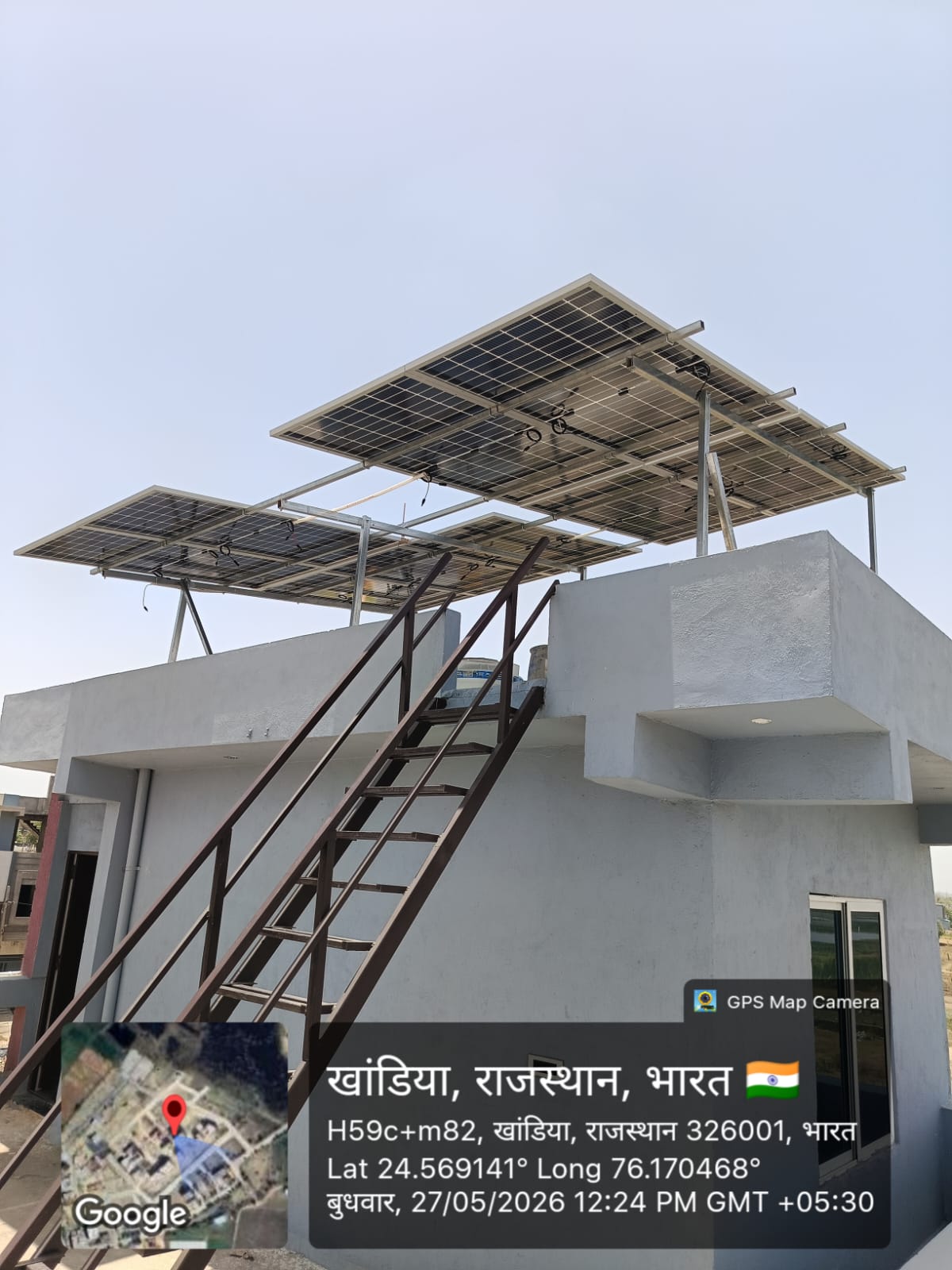
Price is the first question almost everyone asks about rooftop solar — and the answer changes with system size, panel type and subsidy. This breakdown gives you realistic 2026 price ranges for home systems in Rajasthan, shows what your cost looks like after subsidy, and flags the extras that catch buyers out.
Prices below are indicative ranges for quality, DCR-module, grid-connected systems as of 2026. Your exact quote depends on your roof, brand choice and site conditions.
Price before subsidy
Larger systems cost less per kilowatt, because structure, wiring and labour are spread across more capacity.
| System size | Indicative price | Price per kW |
|---|---|---|
| 1 kW | ₹65,000 – ₹75,000 | ~₹70,000 |
| 2 kW | ₹1,20,000 – ₹1,40,000 | ~₹65,000 |
| 3 kW | ₹1,85,000 – ₹2,05,000 | ~₹65,000 |
| 5 kW | ₹2,65,000 – ₹2,95,000 | ~₹55,000 |
| 10 kW | ₹5,20,000 – ₹5,80,000 | ~₹55,000 |
Price after the PM Surya Ghar subsidy
The central government subsidy under PM Surya Ghar Muft Bijli Yojana for homes is:
- ₹30,000 per kW for the first 2 kW
- ₹18,000 for the third kW
- Capped at ₹78,000 for systems of 3 kW and above
| System size | Typical price | Central subsidy | Your cost after subsidy |
|---|---|---|---|
| 1 kW | ₹70,000 | ₹30,000 | ~₹40,000 |
| 2 kW | ₹1,30,000 | ₹60,000 | ~₹70,000 |
| 3 kW | ₹1,95,000 | ₹78,000 | ~₹1,17,000 |
| 5 kW | ₹2,75,000 | ₹78,000 | ~₹1,97,000 |
Rajasthan residents may be eligible for an additional state top-up on the same system — ₹17,000 at the time of writing. State schemes change, so confirm current eligibility during your survey. Living in Kota, Baran, Jhalawar or Bundi? See our local rooftop solar guide for Hadoti homes. Our subsidy guide explains the application process step by step.
Important: you pay the full price upfront. The subsidy is credited to your bank account after the system is installed, inspected and commissioned.
What a complete quote should include
Compare quotes on what is included, not just the headline price. A complete home installation covers:
- DCR solar panels from an ALMM-listed model
- Grid-tied inverter with monitoring app
- Hot-dip galvanised mounting structure
- DC and AC solar cables, conduits and connectors
- DCDB and ACDB with surge protection and isolators
- Earthing kit and lightning arrester
- Installation, testing and commissioning
- Subsidy portal registration and DISCOM net-metering paperwork
What changes the price
- Panel brand and technology. Established brands and newer TOPCon panels cost more than entry-level options.
- DCR vs non-DCR panels. DCR modules cost more but are required for the subsidy — usually a worthwhile trade.
- Structure height. Elevated structures that let you use the roof beneath cost more than standard low frames.
- Roof type. Tin sheds and sloped roofs need different mounting than flat RCC roofs. See Best Roof Types for Solar.
- Cable run length. A long distance from roof to meter adds cable and conduit cost.
- Batteries. Adding battery backup in a hybrid system raises the price significantly.
Costs people forget to ask about
- Net meter and DISCOM fees. Some DISCOMs charge application, meter testing or meter replacement fees, which may or may not be in your quote.
- Load enhancement. If your sanctioned load is lower than the system size, increasing it involves a separate fee.
- GST. Ask whether the quoted price is GST-inclusive, and get a proper tax invoice.
- AMC after the first year. Many installers include free service for a period, then charge for an annual maintenance contract.
Is a cheaper quote worth it?
A quote far below the ranges above usually means something has been cut: non-DCR panels that lose your subsidy, a thin structure, missing earthing, or cheap connectors. Those savings disappear quickly if the subsidy is rejected or the system underperforms for years.
To see how quickly your system pays for itself, try our solar savings calculator, or read Solar Panel ROI: When Do They Pay for Themselves?
Frequently asked questions
What is the price of a 3 kW solar system in 2026?
A quality 3 kW grid-connected system with DCR panels typically costs ₹1,85,000–₹2,05,000 before subsidy. After the ₹78,000 central subsidy, your net cost is roughly ₹1.1–1.3 lakh, and lower still if you qualify for a state top-up.
Is the subsidy deducted from the installer's price?
No. You pay the full price to the installer. The subsidy is transferred to your bank account after your system is installed, inspected and approved on the national portal.
Why do solar quotes vary so much?
Differences in panel brand, DCR status, structure quality, inverter choice and what paperwork is included all affect price. Always compare quotes line by line rather than on the total alone.
Does the price include the net meter?
It depends on the installer. Some include net meter charges and DISCOM fees; others list them separately. Ask for this in writing before signing.