Rooftop Solar vs Community Solar vs Solar Farms
Compare rooftop solar with community solar and solar farms: how each works, who can use them, costs, savings and which option fits a home or business.
Solar energy does not have to sit on your own roof. You may have heard of solar farms, shared "community solar" projects, or buying solar power from a plant elsewhere. Each model suits different people. Here is how rooftop solar compares with the alternatives, and which makes sense for a home or business.
Quick comparison
| Rooftop solar | Community / shared solar | Solar farm (utility or open access) | |
|---|---|---|---|
| Where panels are | Your own roof | Shared site or shared roof | Large ground-mounted plant |
| Who owns it | You | Shared owners or developer | Developer, utility or business |
| Upfront cost | Moderate | Low to moderate | High (for owners) |
| Needs your roof | Yes | No | No |
| Home subsidy | Yes (eligible systems) | Limited | No |
| Best for | Homes and businesses with roofs | Flats and shaded roofs | Large commercial and industrial users |
Rooftop solar
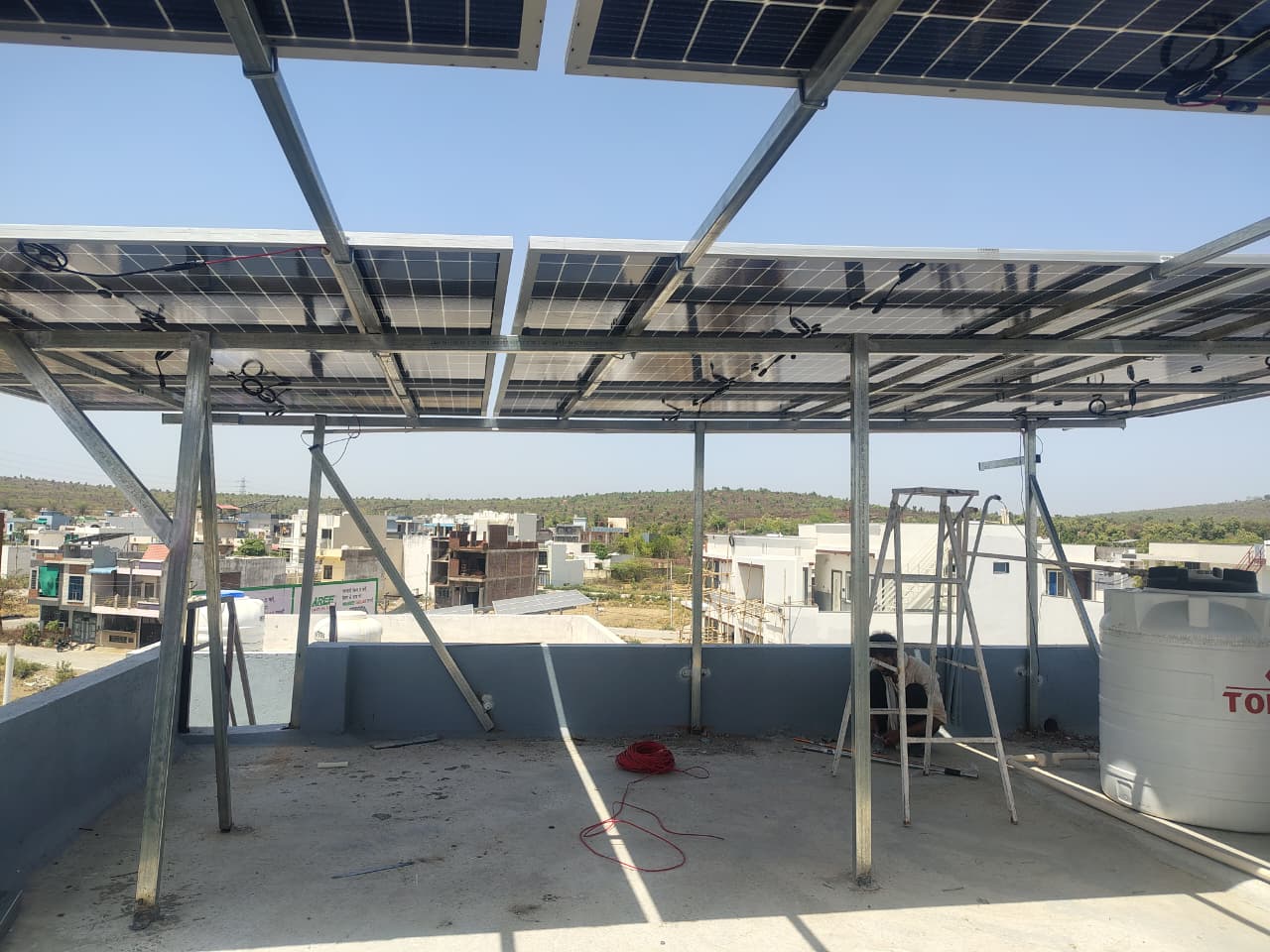
Panels on your own roof power your home or business directly, with surplus exported through a net meter.
Advantages:
- Highest savings for most homes, since power is produced where it is used
- Eligible for the PM Surya Ghar subsidy for homes
- You own the system and all its benefits
- No transmission charges on self-consumed power
Limitations:
- Needs suitable, shadow-free roof space
- Not practical for many apartment residents without a shared roof
Community or shared solar
Several consumers share the benefit of a single solar installation. In India, this usually takes one of these regulatory forms where the state allows them:
- Group net metering: one owner with several electricity connections, such as multiple buildings, credits surplus from one system across those connections.
- Virtual net metering: several consumers share the generation from one system, with credits divided among them — useful for apartment residents or neighbours.
- Housing society rooftop systems: a system on a shared roof powers common areas, and in some cases benefits are shared among residents.
Advantages:
- Access to solar without your own suitable roof
- Can lower costs through a larger shared system
Limitations:
- Availability depends on your state's regulations and your DISCOM, and is not offered everywhere
- More complex agreements between participants
- Smaller individual savings than owning a rooftop system
Solar farms
Solar farms are large ground-mounted plants. They serve people in two main ways:
- Utility-scale plants sell power to DISCOMs, feeding the grid everyone uses.
- Open access solar lets large commercial and industrial consumers buy solar power directly from a plant elsewhere, delivered through the grid, typically subject to eligibility thresholds and transmission and other charges.
Advantages:
- Very low cost per unit to generate at large scale
- Ideal for businesses with high consumption and no roof space
Limitations:
- Not available to individual homes as a direct purchase
- Grid charges reduce savings compared with generating on your own roof
- Long, complex contracts
Which option is right for you?
- Independent house with a usable roof: rooftop solar — the best savings and full subsidy.
- Apartment resident: check whether your society can install a shared rooftop system, and whether your state offers virtual net metering.
- Home with a heavily shaded roof: look at elevated structures first, then shared options if available.
- Large factory or commercial user: combine rooftop solar on your own sheds with open access solar for additional demand.
For homes, rooftop solar is almost always the most practical and financially rewarding choice. Read Is Rooftop Solar Worth It in 2026? or check your savings.
Frequently asked questions
What is community solar?
Community solar lets several people share the benefits of one solar installation, instead of each installing panels on their own roof. Its availability depends on state regulations such as virtual or group net metering.
Can I get solar power if I live in a flat?
Possibly. Your housing society can install a rooftop system for common areas, and some states allow virtual net metering to share generation among residents. Speak to your society and DISCOM about the options available.
Is a solar farm cheaper than rooftop solar?
Solar farms generate power more cheaply at scale, but homes cannot buy from them directly. For a household, rooftop solar with subsidy typically gives far better savings.
What is open access solar?
Open access allows eligible large electricity consumers, usually businesses and industries, to buy solar power from a plant located elsewhere, delivered through the grid, subject to regulatory charges and minimum load requirements.