
Solar Inverters Explained: String vs Microinverters vs Hybrid
String inverters, microinverters, optimisers and hybrid inverters compared on cost, shade handling, battery support and lifespan, and which your home needs.
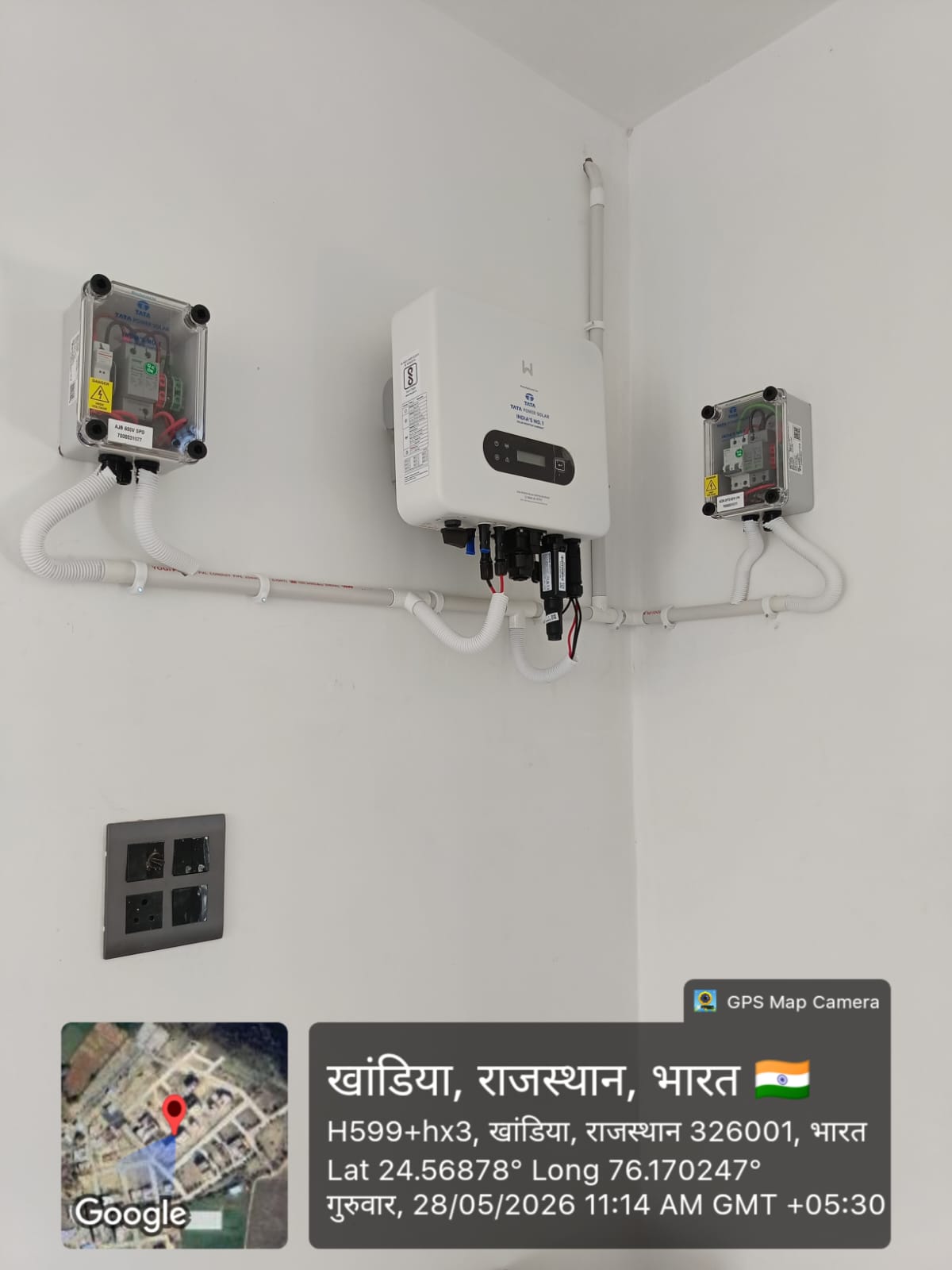
Panels get most of the attention, but the inverter is the brain of a solar system. It converts power, tracks the best output, keeps the system safe and reports how everything is performing. It is also the component most likely to need replacing during the system's life. Here is how the main inverter types compare.
What an inverter does
- Converts DC to AC. Panels produce direct current; your home and the grid use alternating current.
- Maximum power point tracking (MPPT). Continuously adjusts to extract the most power as sunlight changes.
- Grid synchronisation. Matches the grid's voltage and frequency.
- Safety. Shuts down during grid failure (anti-islanding) and detects faults.
- Monitoring. Reports daily generation to an app or web portal.
Quick comparison
| String inverter | Microinverters | Power optimisers | Hybrid inverter | |
|---|---|---|---|---|
| Where it sits | One unit near meter | Behind each panel | Behind each panel + central inverter | One unit near meter |
| Cost | Lowest | Highest | Medium–high | High |
| Partial shade handling | Weak | Excellent | Very good | Weak–medium |
| Panel-level monitoring | No | Yes | Yes | No |
| Battery support | No | Limited | Varies | Yes |
| Typical lifespan | 10–15 years | 20–25 years | 20–25 years (optimisers) | 10–15 years |
String inverters
The most common choice for homes. Panels are wired in series into one or more "strings" connected to a single inverter.
Pros:
- Lowest cost and simplest design
- One unit to maintain or replace
- Proven, reliable technology
Cons:
- In a string, the weakest panel limits the others — shade or dirt on one panel reduces output across that string.
- Only system-level monitoring, so it is harder to spot a single faulty panel.
Best for: shadow-free roofs where all panels face the same direction. Inverters with two MPPT inputs can handle two roof sections facing different directions.
Microinverters
A small inverter sits behind every panel, converting power right at the panel.
Pros:
- Each panel works independently, so shade on one does not affect the rest.
- Panel-level monitoring pinpoints problems quickly.
- Easy to expand one panel at a time.
- Long lifespan and no high-voltage DC running across the roof.
Cons:
- Highest upfront cost.
- Electronics on the roof face heat, and replacing one means going up to the array.
Best for: roofs with unavoidable partial shade, or panels facing several directions.
Power optimisers
A middle path: an optimiser behind each panel conditions its output, and a central inverter converts the power.
Pros: much of the shade tolerance and panel-level monitoring of microinverters, at a lower cost.
Cons: more components than a plain string system, and still a central inverter to replace eventually.
Hybrid inverters
A hybrid inverter manages solar panels, the grid and a battery together.
Pros:
- Provides backup power during outages when paired with a battery.
- Can store surplus solar for evening use.
- Many models let you add a battery later.
Cons:
- Costs more than a standard on-grid inverter.
- Battery adds considerable cost.
Best for: homes with frequent power cuts, or anyone who wants to be battery-ready. Read On-Grid vs Off-Grid vs Hybrid.
Sizing the inverter
Inverter capacity is usually matched closely to the panel capacity. A small DC-to-AC ratio above 1 — for example 3.3 kW of panels on a 3 kW inverter — is common, because panels rarely hit their full rating in real conditions. Your installer should size this from your design, not by guesswork.
What to check before choosing an inverter
- Efficiency — look for peak efficiency of 97% or higher.
- Number of MPPT inputs — two or more if panels face different directions.
- Warranty — typically 5–10 years, often extendable.
- Local service support — how quickly can a fault be fixed near you?
- Monitoring app — easy to use and reliable.
- Operating temperature and IP rating — important on hot rooftops.
Which inverter should you choose?
- Shadow-free roof, one direction, lowest cost: string inverter
- Shaded roof or multiple directions: microinverters or optimisers
- Frequent outages or battery plans: hybrid inverter
Frequently asked questions
Which type of inverter is best for home rooftop solar?
For a shadow-free roof, a quality string inverter offers the best value. If part of your roof is shaded or panels face different directions, microinverters or power optimisers recover lost output.
How long does a solar inverter last?
String and hybrid inverters typically last 10–15 years, so expect one replacement during the life of your panels. Microinverters and optimisers often last 20–25 years.
Can I add a battery to my existing on-grid inverter?
Not directly to a standard on-grid inverter. You would need to replace it with a hybrid inverter, or add an AC-coupled battery with its own inverter. Choosing a hybrid-ready inverter from the start makes this easier.
Where should the inverter be installed?
In a shaded, well-ventilated place protected from rain, close to the main electrical board. Direct sun and heat shorten inverter life.