
Best Rooftop Solar Installers in Baran and Jhalawar — What to Look For
Choosing a rooftop solar installer in Baran, Jhalawar, Kota or Bundi? A checklist: registration, DCR panels, local service, quotes, warranties and red flags.
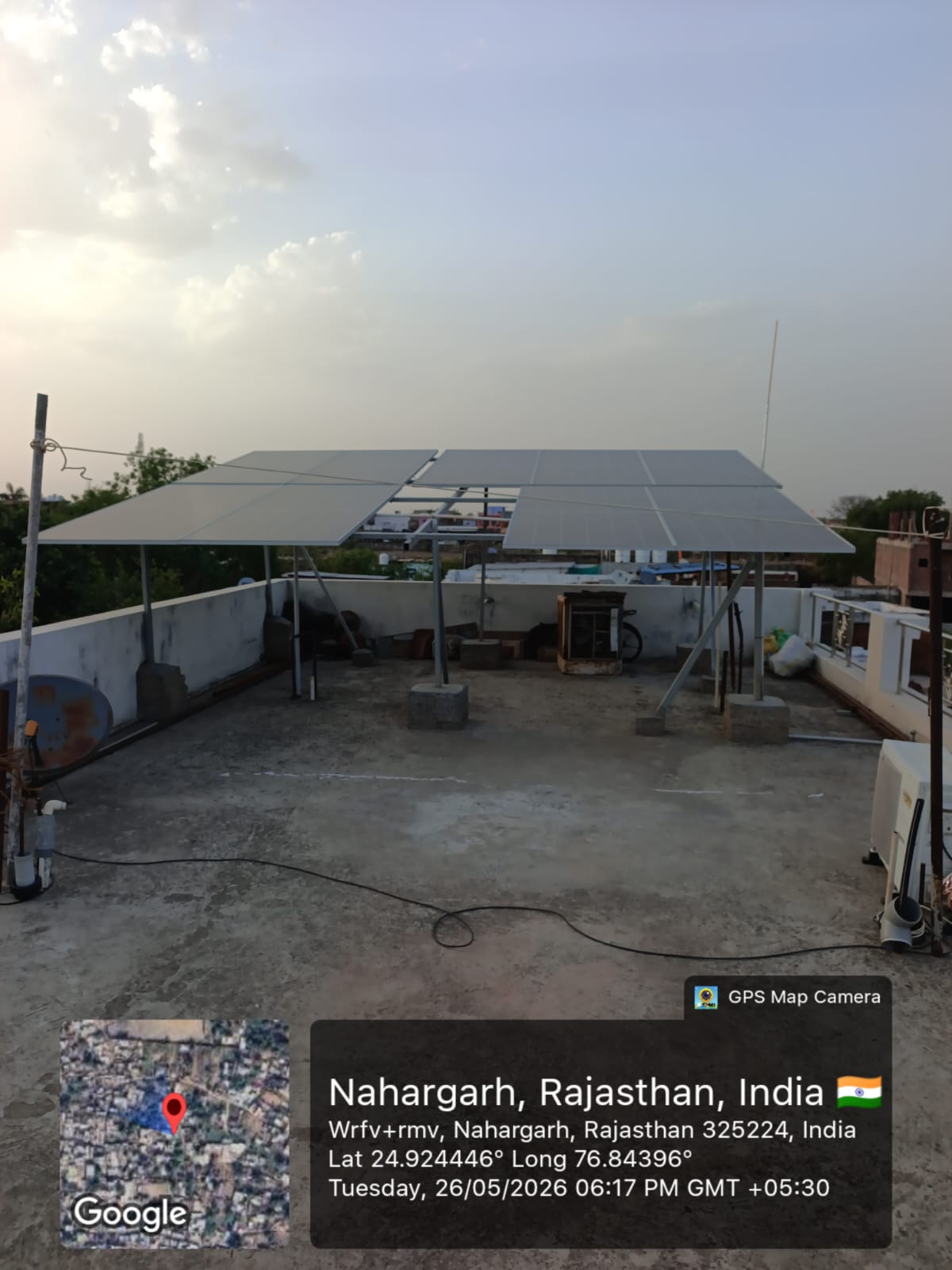
Rooftop solar is a 25-year decision, and the installer you choose matters as much as the panels. In smaller towns and districts like Baran, Jhalawar, Kota and Bundi, the difference between a good installer and a poor one shows up years later — in whether your subsidy arrives, how quickly faults are fixed, and whether the system still performs. Here is a practical checklist for choosing well.
1. Registered vendor for your DISCOM
To claim the PM Surya Ghar subsidy, your system must be installed by a vendor registered on the national portal for your DISCOM. Most of the Kota division comes under Jaipur Vidyut Vitran Nigam Limited (JVVNL) — check the name on your electricity bill to confirm yours. For sunlight, net metering and subsidy details specific to the region, read our Hadoti rooftop solar guide.
Ask: "Are you a registered vendor for my DISCOM on the PM Surya Ghar portal?" and verify it on the portal yourself.
2. Genuine DCR panels on the ALMM
The subsidy requires DCR panels made with domestically manufactured cells, from a model listed on the ALMM. Non-DCR panels are a common reason subsidies get rejected.
Ask for in writing: panel brand, model number, wattage, DCR status and ALMM listing.
3. Real local presence
When your inverter shows an error or a panel needs attention, you want a technician who can reach your roof in a day or two — not a company whose nearest team is several hours away.
Look for:
- A physical office in or near your district
- Their own installation and service team, not only subcontractors
- Past installations nearby that you can see or whose owners you can speak to
A local team also knows your DISCOM's officers, processes and typical approval timelines, which keeps paperwork moving.
4. A proper site survey before the quote
A trustworthy installer insists on visiting your roof before quoting. They check shade, roof strength, electrical board, earthing and cable routes.
Red flag: a firm price given over the phone without any site visit.
5. A detailed, itemised quotation
A good quote lists every component and service. Compare quotes line by line:
- Panel make, model, wattage, DCR and ALMM status
- Inverter make, model and capacity
- Structure material (hot-dip galvanised) and height
- DCDB, ACDB, surge protection, earthing and lightning arrester
- Installation, commissioning, subsidy paperwork and net meter application
- Warranties on panels, inverter and workmanship
- GST, and any DISCOM fees included or excluded
See Rooftop Solar Panel Cost in Rajasthan for current price ranges.
6. Installation quality you can check
Ask how they handle the details that decide long-term reliability:
- Structure: hot-dip galvanised or aluminium, designed for wind loads
- Connectors: matched MC4 connectors, not mixed brands
- Earthing: dedicated earthing pits, and a lightning arrester
- Cabling: UV-resistant solar cable in conduits, neatly routed
- Inverter placement: shaded and ventilated
7. Clear warranties and after-sales service
Ask exactly:
- How long is the workmanship warranty?
- What after-sales service is included, and for how long?
- What is the response time for a fault?
- Who handles warranty claims with manufacturers?
Read Solar Panel Warranty: What's Covered for details.
8. Full paperwork support
The subsidy and net metering process involves portal registration, feasibility approval, document uploads, net meter application and inspection. An experienced installer handles this for you and tells you honestly how long approvals usually take with your DISCOM. Our step-by-step installation guide shows what each stage involves.
Red flags to avoid
- Prices far below the market with vague component details
- Pressure to pay the full amount before feasibility approval
- Unwillingness to name the panel model or show DCR proof
- No site survey
- Promises of subsidy "guaranteed" regardless of eligibility
- No local office or service contact
- Verbal promises that are not written into the agreement
Questions to ask every installer
- Are you a registered PM Surya Ghar vendor for my DISCOM?
- Which panel model will you install, and is it DCR and ALMM-listed?
- Where is your nearest service team?
- Can I see or contact customers from past installations nearby?
- What is included in the price, and what is extra?
- What warranties and service period do you provide in writing?
- Who handles the subsidy and net metering paperwork?
Gajendra Trading Company is based in Atru, Baran, with our own engineers covering Baran, Kota, Jhalawar and Bundi. If you would like a free site survey and an itemised quote to compare, request one here.
Frequently asked questions
How do I check if a solar installer is registered for the subsidy?
Registered vendors are listed on the PM Surya Ghar national portal by state and DISCOM. Ask the installer for their registration details and confirm them on the portal before signing.
Which DISCOM covers Baran and Jhalawar?
Most of the Kota division, including Baran and Jhalawar districts, is served by Jaipur Vidyut Vitran Nigam Limited (JVVNL). The name of your distribution company is printed on your electricity bill, so check it to be sure.
Should I choose the cheapest solar quote?
Not automatically. Very low quotes often use non-DCR panels, thin structures or skip earthing and lightning protection. Compare itemised quotes and choose the best value, not simply the lowest price.
How important is a local solar installer?
Very. Rooftop solar needs occasional service over 25 years. A local installer can reach you quickly for faults, handles your DISCOM's paperwork efficiently, and is easier to hold accountable.